Custom EPDM Sealing Profiles: 2026 Buyer's Guide
- Share
- publisher
- RESRUB
- Issue Time
- Sep 12,2026
Summary
A practical 2026 sourcing guide for custom EPDM sealing profiles, covering profile geometry, material selection, dimensions, tolerances, OEM workflow and supplier questions.
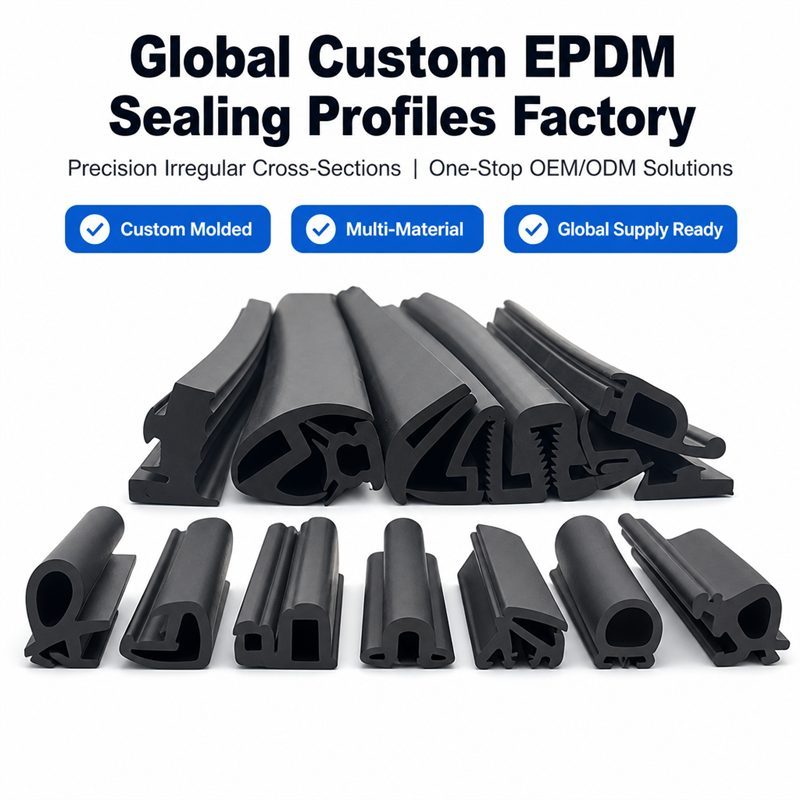
For industrial buyers, a rubber seal is not simply a strip of material. Its cross-section, compression behavior, compound, tolerances and joining method determine whether an enclosure stays protected over years of service. This guide turns those variables into a practical RFQ checklist for custom EPDM sealing profiles.
Why Custom EPDM Sealing Profiles Are a High-Intent Sourcing Topic
Buyers increasingly search for a profile that matches a real groove, panel or door rather than a generic weatherstrip. EPDM remains a frequent starting point because it performs well in outdoor weather, ozone, water and temperature cycling. For cabinets, construction systems, HVAC equipment, vehicle panels and industrial enclosures, it offers a practical balance of resilience and cost.
The key word is custom. A proven compound can still leak when the bulb is too stiff, the lip misses the mating surface or the foot does not lock into the channel. Begin with the sealing geometry and operating environment, then choose the material.
See our custom rubber sealing strip solutions for profile, size and OEM/ODM options.
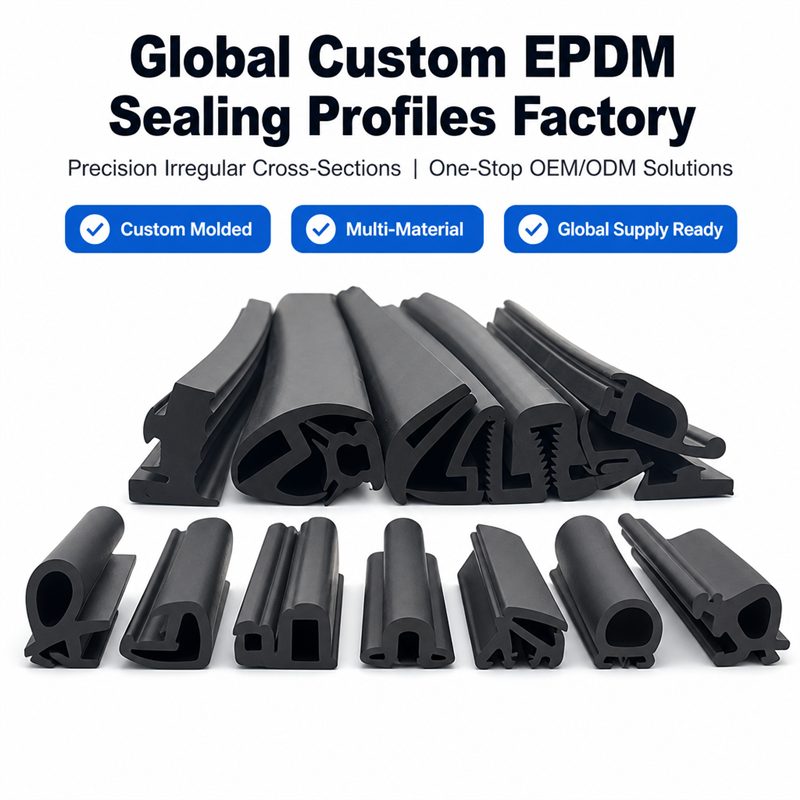
Custom profile families can be developed from drawings, samples or installation data.
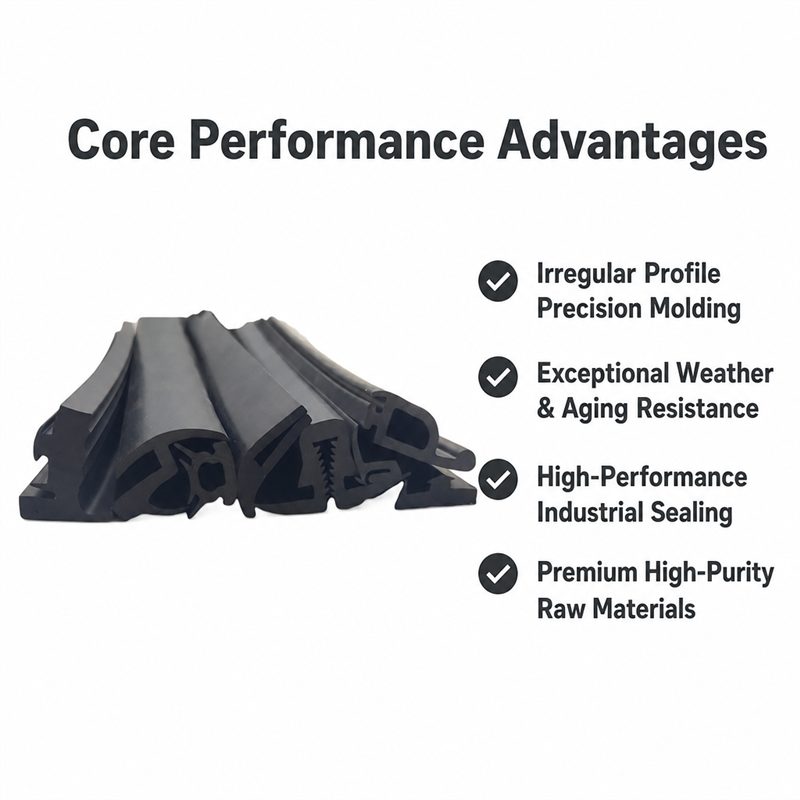
Weather resistance, stable extrusion and consistent sealing surfaces are core design goals.
1. Match the Compound to the Real Environment
EPDM: usually preferred for outdoor weather, ozone, water, steam and general enclosure sealing. It is not the default choice for petroleum oil exposure.
Silicone: useful where a wider temperature range, softness or clean appearance is required. It may have different tear and abrasion behavior than EPDM.
NBR: considered when oil and fuel resistance are central requirements, while outdoor ozone performance needs careful review.
TPV, TPE and PVC: may suit recyclable, color-specific, co-extruded or cost-sensitive profile designs depending on the application.
Compare our EPDM and silicone extrusion profile options or review broader materials and process capabilities.
2. Define How the Profile Will Seal
A reliable drawing should show more than overall width and height. Identify the mounting foot, sealing bulb or lip, cavity dimensions, wall thickness and contact direction. Tell the supplier whether the profile slides into a channel, clips over a flange, bonds with adhesive or is mechanically retained.
- Compression direction and expected compression percentage
- Gap range and mating-surface condition
- Corner radius, joint location and cut-length tolerance
- Required insertion force or pull-off resistance
- Solid, sponge, dual-density or co-extruded construction
For flexible enclosure edges and equipment panels, view this EPDM edge trim sealing strip example.
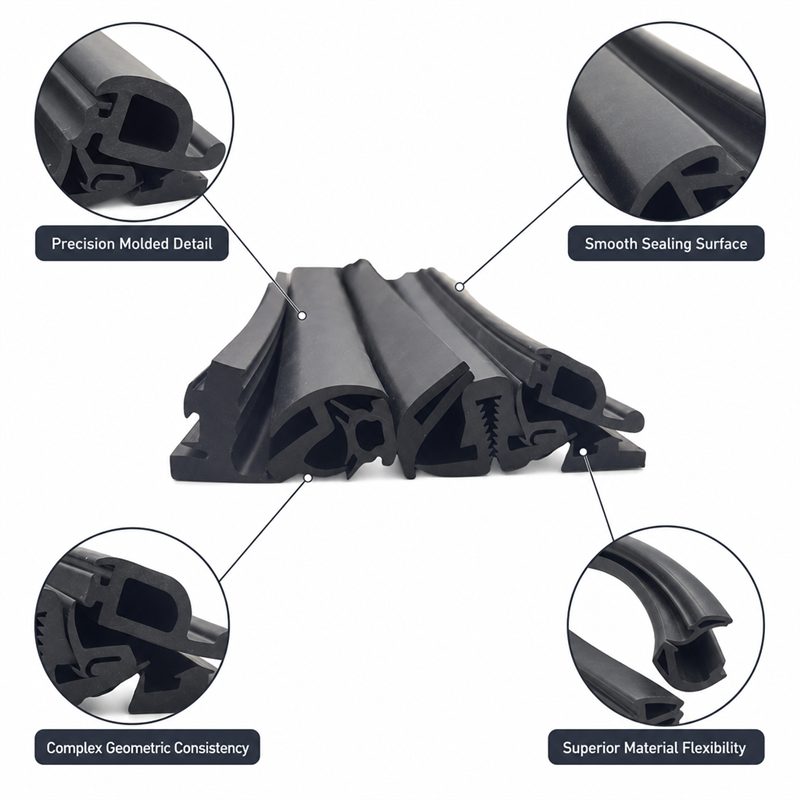
Small lips, cavities and locking details often control the final sealing result.
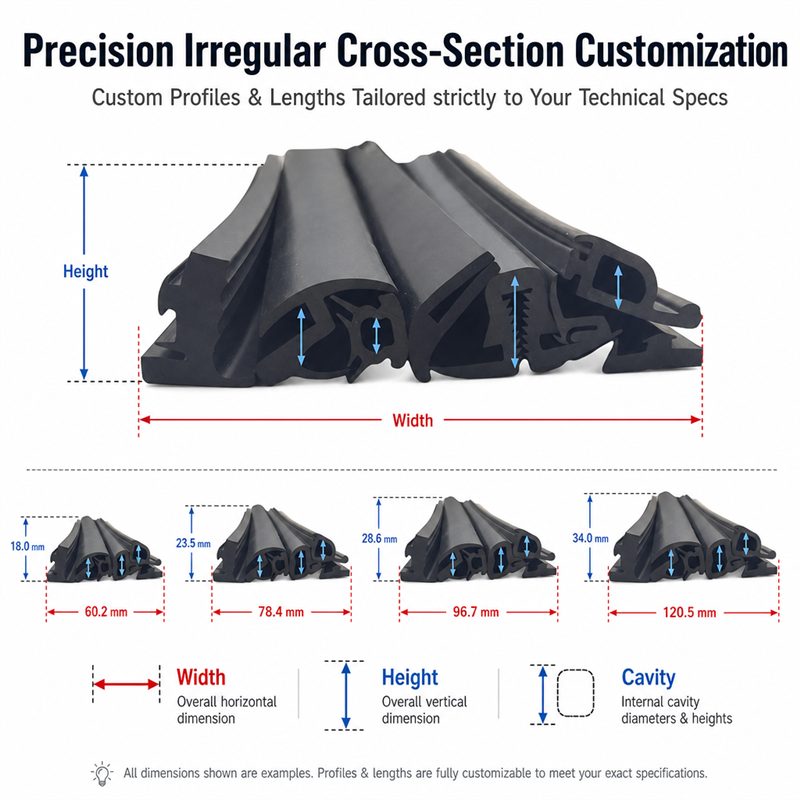
Mark every functional dimension and indicate which tolerances are critical.
3. Send a Specification That Can Be Manufactured
A useful RFQ includes a 2D cross-section or CAD file, target dimensions, tolerances, material, hardness or density, color, length and annual quantity. If no drawing exists, a clean sample and installation photos can help create the first profile proposal.
Minimum RFQ Data
Geometry: drawing, sample or groove dimensions
Material: EPDM, silicone, NBR, TPV/TPE/PVC or performance requirement
Physical target: hardness for solid profiles; density and compression behavior for sponge profiles
Supply format: straight length, coil, cut piece, bonded ring or fabricated corner
Commercial data: trial quantity, annual demand, packaging and delivery destination
If the application needs soft compression and weather protection, this custom EPDM sponge extrusion profile provides a useful reference.
Quick Material Comparison for Sealing Profiles
| Material | Best Starting Point | Check Carefully |
|---|---|---|
| EPDM | Outdoor weather, water, ozone, HVAC and enclosure seals | Oil and fuel exposure |
| Silicone | Wide temperature range, soft touch, color and clean applications | Tear, abrasion and project cost |
| NBR | Oil-contact machinery and equipment sealing | Ozone and outdoor aging |
| TPV/TPE/PVC | Co-extrusion, color, recyclable processing or defined cost targets | Temperature, compression set and chemical exposure |
4. Prototype Before Committing to Production
A technically complete quote should separate tooling, sampling and production assumptions. Ask how the supplier verifies cross-section dimensions, surface quality, hardness or density, cut length and packaging. A small prototype run can reveal installation force, corner behavior and actual compression before scale production.
For critical seals, test the prototype in the real assembly. Laboratory properties are useful, but the final result depends on groove variation, fastener spacing, panel flatness and operating cycles.
Questions to Ask a Manufacturer
- Can you work from a sample if the original drawing is unavailable?
- Which dimensions will be treated as critical-to-function?
- How are first samples measured and approved?
- Can you supply cut lengths, adhesive backing, spliced rings or fabricated corners?
- How will long coils be wound and protected during export shipment?
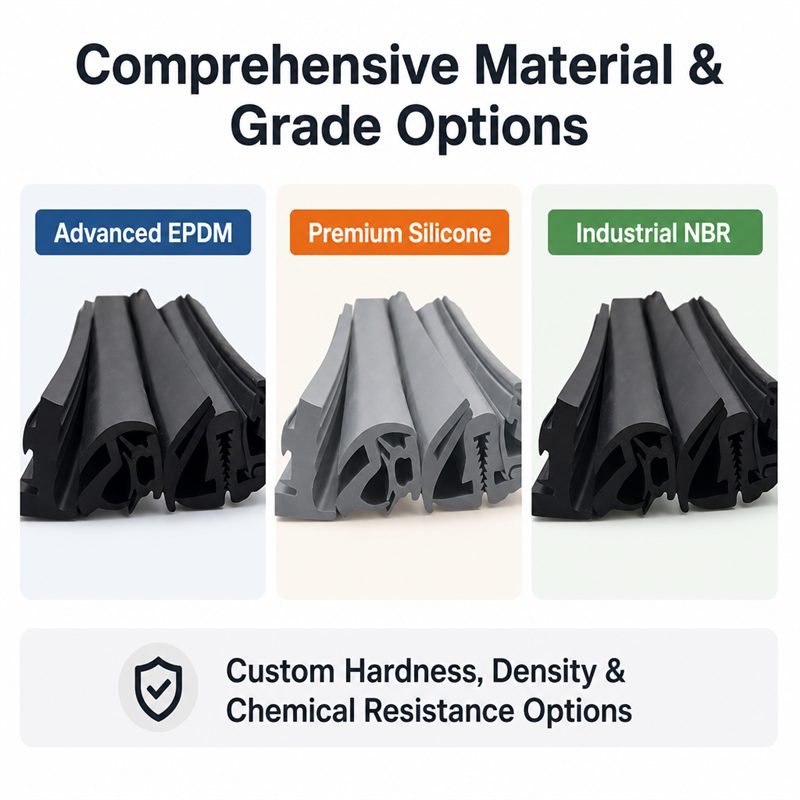
Material selection should follow exposure, temperature, compression and service-life requirements.
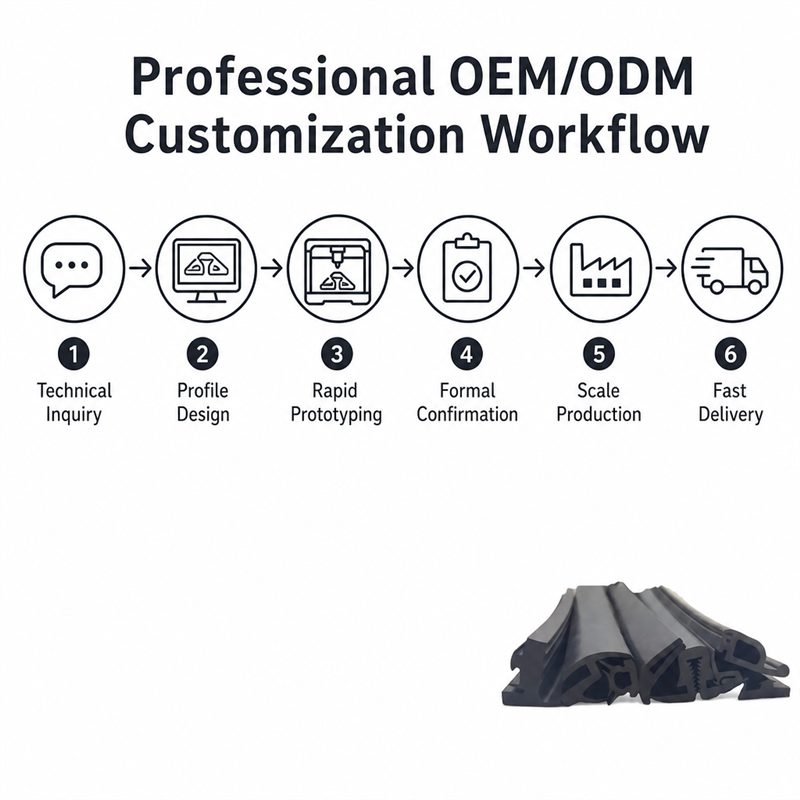
A clear path from inquiry and drawing review to prototype, approval and production reduces sourcing risk.
5. Use a Stage-Gated OEM/ODM Workflow
A practical project moves through six checkpoints: technical inquiry, profile design review, rapid prototyping, formal sample confirmation, scale production and delivery. Each checkpoint should close an uncertainty before the next cost is committed.
RESRUB supports custom materials, specifications, lengths, shapes, extrusion processes and secondary fabrication. The most efficient first message includes the application, drawing or sample, operating environment, target quantity and delivery country.
Browse the rubber sealing strip product solution or send your specifications through our contact page for a drawing-based review.
Frequently Asked Questions
Is EPDM suitable for outdoor sealing strips?
EPDM is commonly selected for outdoor weather, ozone and water resistance. Final suitability still depends on temperature, compression, chemical contact and required service life.
What information is needed for a custom rubber profile quote?
Provide a cross-section drawing or sample, critical dimensions, material or exposure conditions, hardness or density, color, supply length, quantity and delivery destination.
Can a supplier copy an existing sealing profile from a sample?
Often yes. A physical sample can be measured and converted into a preliminary drawing, but the buyer should confirm functional dimensions and any changes needed for the current assembly.
Need a Custom EPDM Sealing Profile?
Send your drawing, sample or installation dimensions for a material and manufacturability review.
Contact RESRUB