Everything You Need to Know About Custom Extruded Rubber Profiles
- Share
- Issue Time
- Jun 22,2026
Summary
Custom extruded rubber profiles seal, damp vibration and resist weather in automotive, construction and aerospace. Learn how material choice and design deliver quality, plus custom options from RESRUB
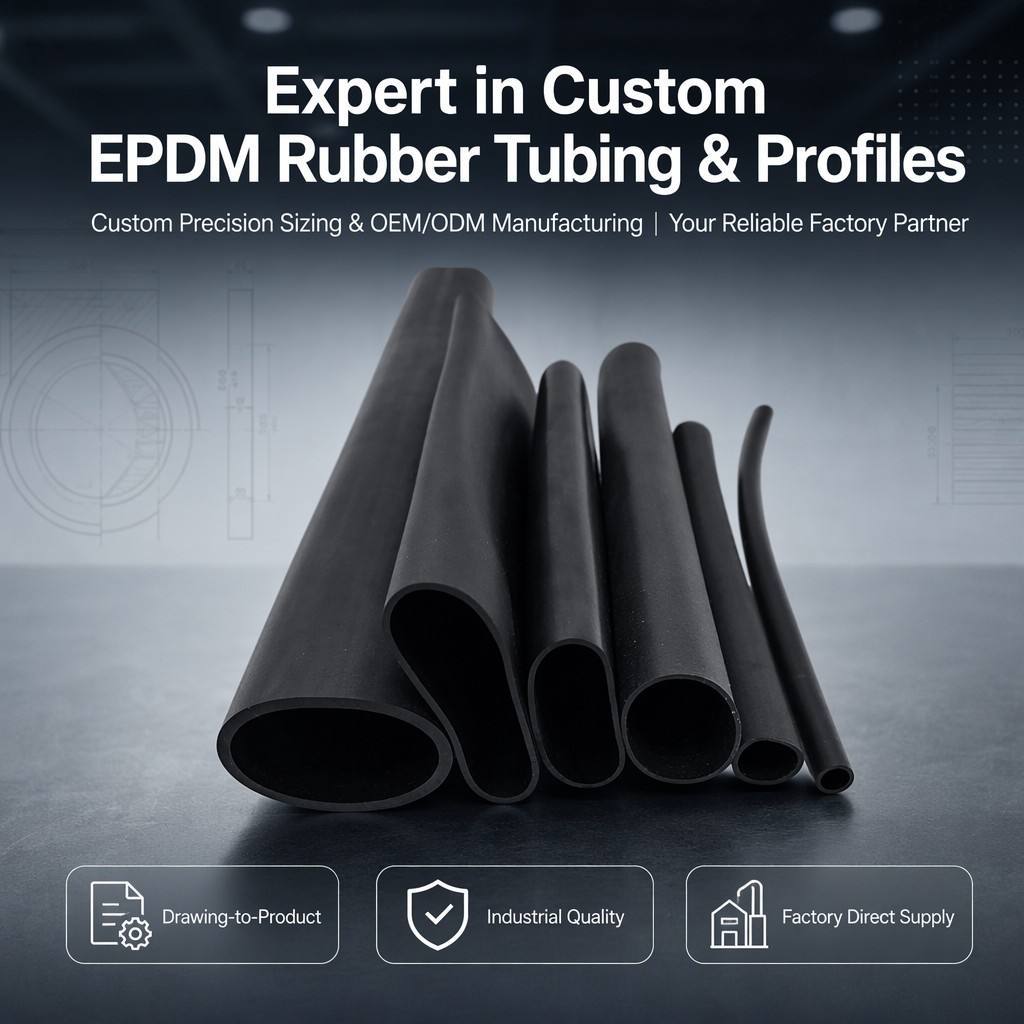
As experts in engineered rubber solutions, we understand the critical role custom extruded rubber profiles play across countless industries. From seals preventing leaks to components dampening vibrations, the precision and material integrity of these parts are paramount for performance and durability. These versatile components are used everywhere from automotive and construction to electronics and aerospace for their resilience and sealing capabilities. Join us as we delve into the essential aspects of custom extruded rubber profiles, exploring how meticulous design, material selection, and manufacturing processes contribute to their success.
Ensuring Unmatched Quality in Custom Extruded Rubber Profiles: Our In-House Tooling Advantage
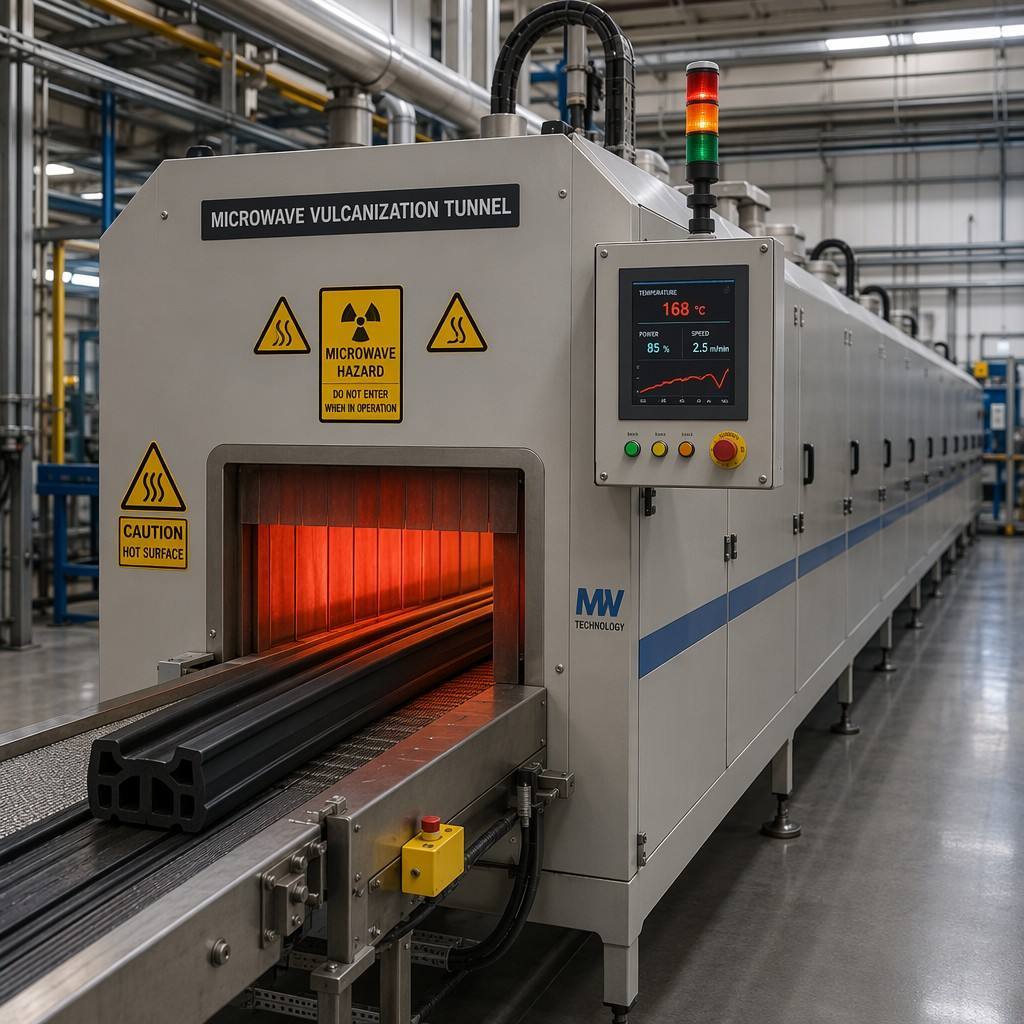
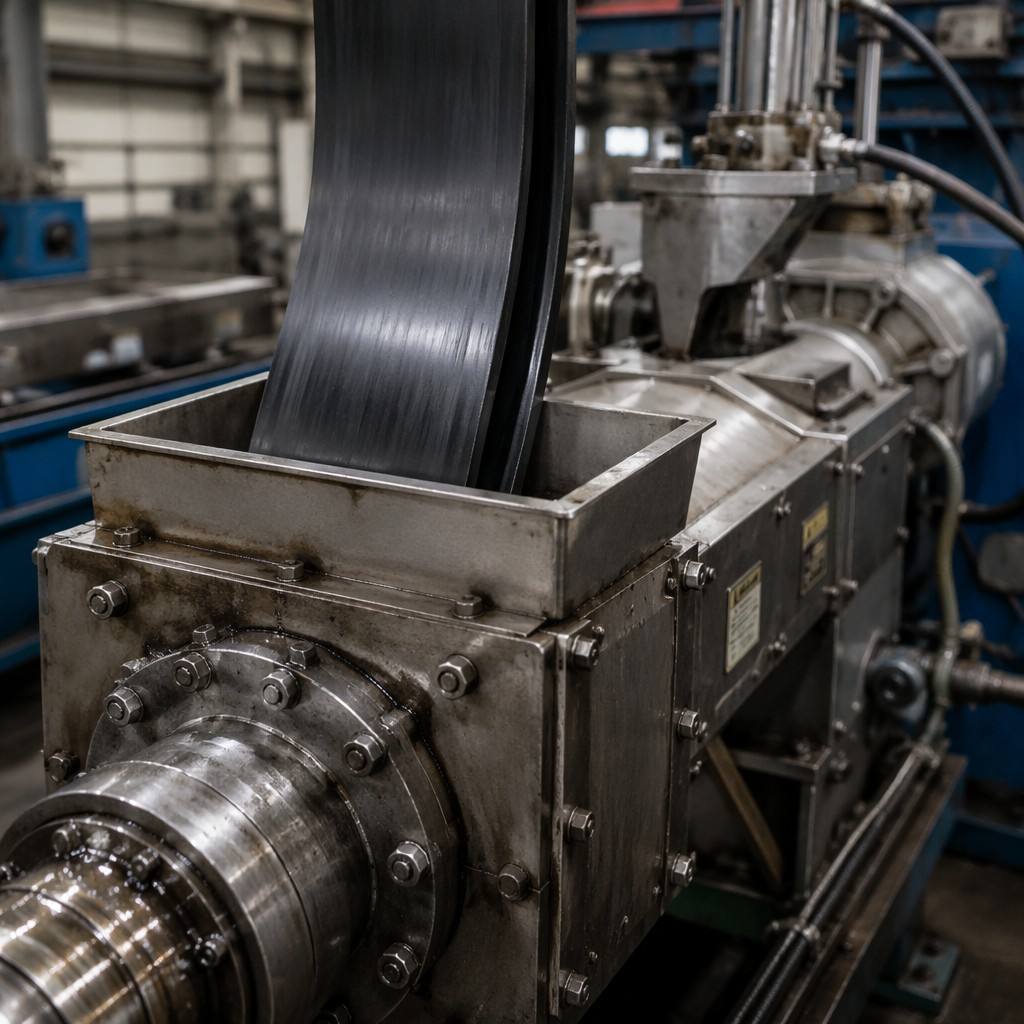
The performance of an extruded rubber profile is directly tied to the quality of its manufacturing process. Control over every stage, from the initial raw material check to the final dimensional inspection, is what separates a high-performance part from a potential point of failure.
The Imperative of Precision and Consistency in Every Rubber Profile
In rubber extrusion, precision is not just a goal; it's a fundamental requirement. Consistency in a profile's cross-section, hardness (durometer), and material composition ensures it performs its function reliably over its entire service life. Whether it's creating an airtight weather seal or a vibration-dampening bumper, every millimeter of the profile must meet strict specifications. Quality control in rubber extrusion focuses on maintaining this consistency from start to finish. This involves planned testing, clear procedures, and a deep understanding of how rubber behaves during the extrusion process.
How Minor Variances Impact the Overall Product Integrity
Even seemingly insignificant deviations in a rubber profile's dimensions or material properties can have profound consequences. For a seal, a minor variance can lead to leaks, allowing ingress of water, dust, or air, which compromises the integrity of the entire assembly. In dynamic applications, dimensional inaccuracies can cause premature wear and tear, leading to component failure. For example, a dimensional deviation in a rubber-to-metal bonded part can cause gaps, jamming, or reduced sealing performance. These failures can result in costly warranty claims, product recalls, and damage to a brand's reputation.
Why We Prioritize In-House Tooling for Superior Rubber Profiles
The extrusion die is the heart of the process, and its quality dictates the quality of the final product. By managing tooling in-house, we gain complete control over this critical variable. Outsourcing tooling, especially overseas, can introduce risks such as communication barriers, longer lead times for adjustments, and a lack of direct oversight, which can compromise quality. In-house tooling allows our engineers and toolmakers to work collaboratively, ensuring the die is perfectly optimized for the chosen material and profile design.
Guaranteeing Strict Quality Standards from Concept to Completion
Our commitment to quality begins with in-house tooling and extends through the entire production workflow. Having our tooling department on-site allows for rapid modifications, real-time feedback between the design and production teams, and proactive maintenance, ensuring tools are always in optimal condition. A comprehensive quality control program involves several key stages:
- Raw Material Verification: Every batch of rubber compound is tested to confirm its hardness, cleanliness, and consistency before it enters the extruder.
- Process Parameter Monitoring: Critical parameters like temperature, pressure, and extrusion speed are continuously monitored to maintain process stability.
- In-Process Dimensional Checks: The extruded profile is measured regularly as it's produced to ensure it meets strict dimensional tolerances.
- Final Inspection: Finished products undergo a final review for surface appearance, dimensional accuracy, and mechanical properties to ensure they meet or exceed all specifications.
This integrated approach, anchored by our in-house tooling capabilities, significantly reduces the risk of defects and guarantees that every custom extruded rubber profile we deliver offers superior performance and reliability.
The Indispensable Role of Custom Extruded Rubber Profiles in High-Performance Designs
Custom extruded rubber profiles are far more than simple strips of rubber; they are engineered components critical to the function, safety, and longevity of complex systems across a multitude of industries. Their versatility allows them to be shaped into countless forms—from simple cords and tubes to complex, multi-functional seals—each designed for a specific purpose.
Beyond Aesthetics: Functional Applications of Rubber Profiles
While rubber trims can certainly provide a clean, finished look to a product, their primary value lies in their functional performance. They are workhorses that seal, insulate, protect, and dampen vibration in some of the most demanding environments.
Seals and Weatherstripping: Protecting Against the Elements with Custom Rubber Profiles
One of the most common applications for extruded rubber profiles is sealing. Weatherstripping on doors and windows in the automotive and construction industries prevents the ingress of wind, water, and dust, contributing to energy efficiency and interior comfort. These seals must be made from materials like EPDM that offer excellent resistance to weathering, UV rays, and ozone to ensure they don't crack or degrade over time. Custom-designed profiles ensure a perfect fit, creating a tight, reliable seal that protects sensitive components and enhances the user experience.
Flexible Tubing and Vibration Dampeners: Ensuring System Reliability with Engineered Rubber Profiles
Rubber's inherent elasticity makes it an ideal material for absorbing shock and dampening vibrations. Extruded rubber profiles are used to create flexible tubing that can handle fluid transfer in dynamic systems, as well as vibration dampers that isolate sensitive equipment from engine or operational vibrations in industrial machinery. These components are crucial for reducing noise, preventing wear on adjacent parts, and extending the overall life of the equipment. The ability to customize the material compound and profile shape allows for precise tuning of the damping characteristics.
Key Industries Benefiting from Our Advanced Rubber Profile Solutions
The adaptability of custom extruded rubber profiles makes them essential in nearly every major industry.
| Industry | Primary Applications of Custom Extruded Rubber Profiles | Key Benefits |
|---|---|---|
| Automotive | Door seals, window gaskets, trunk seals, vibration-dampening mounts, hose and cable management. | Enhances cabin comfort by reducing noise and weather intrusion; protects wiring and sensitive components; improves vehicle safety and longevity. |
| Aerospace | Cabin door and window seals, aerodynamic surface seals, fire barriers, fluid transfer tubing, wire harnesses. | Ensures pressurization and safety at high altitudes; withstands extreme temperatures and corrosive fluids; dampens vibration to protect sensitive avionics. |
| Construction | Window and door seals, expansion joints, facade gaskets, glazing seals, waterproofing strips. | Improves building energy efficiency by preventing drafts; absorbs structural movement; protects against water damage and environmental factors. |
| Transportation | Door and window seals for trains and buses, anti-vibration mats, protective edge trims for cargo areas. | Ensures passenger comfort and safety; protects vehicles and cargo from damage; withstands heavy wear and tear in public transit environments. |
| Industrial | Machinery guards, equipment seals, conveyor belt side seals, anti-slip profiles, protective bumpers. | Protects workers and equipment; prevents leaks in hydraulic and pneumatic systems; improves operational safety and reduces maintenance. |
From withstanding the extreme temperatures of aerospace applications to providing decades of reliable sealing in a skyscraper's curtain wall, custom extruded rubber profiles are the unsung heroes of modern engineering.
Optimizing the Production of Custom Extruded Rubber Profiles: Tooling Accuracy and Efficient Lead Times
In the world of custom manufacturing, efficiency is paramount. For custom extruded rubber profiles, this efficiency hinges on two interconnected factors: the precision of the extrusion tooling and the ability to manage production schedules effectively to deliver high-quality parts on time.
The Foundation of Efficiency: Precision Tooling in Rubber Profile Manufacturing
Effective tooling design is fundamental to achieving manufacturing excellence. The extrusion die, a specialized tool that shapes the raw rubber compound, must be engineered with absolute precision. This precision directly impacts product quality, production speed, and material waste.
Precision tooling offers several key advantages for efficiency:
- Reduced Setup Time: A well-designed tool allows for quicker and more accurate setup, minimizing equipment downtime between production runs.
- Minimal Waste: Accurate tooling ensures that the profile is produced within tolerance from the start, reducing material scrap and costly reworks.
- Consistent Quality: High-quality tooling guarantees that every foot of the extruded profile is consistent, eliminating variations that could lead to part rejection.
- Higher Throughput: By optimizing the flow of rubber through the die, a precisely made tool can enable faster extrusion speeds without compromising quality.
Managing Tooling from Design to Production for Seamless Project Launch
A seamless project launch requires a disciplined and collaborative approach to tooling management. This process begins long before any metal is cut. It involves:
- Collaborative Design Review: Our engineers work closely with you to analyze the part design, ensuring it's optimized for the extrusion process. This includes reviewing tolerances, wall thicknesses, and key functional features.
- CAD/CAM Integration: We use advanced CAD/CAM platforms to design the tool, simulating the flow of rubber to anticipate and correct potential issues before manufacturing begins.
- In-House Tool Fabrication: Having in-house capabilities means our tooling experts can oversee every step of the die's creation, from machining to finishing, ensuring it meets our exacting standards.
- Prototyping and Validation: We produce initial samples to validate the tool's performance and the profile's dimensional accuracy. Any necessary adjustments can be made quickly and efficiently because the entire process is handled under one roof.
Streamlining Lead Times for Your Custom Rubber Profile Needs
We understand that in today's fast-paced industries, long lead times can be a major roadblock. While outsourcing tooling to overseas providers might seem cheaper initially, it often leads to significant delays due to shipping, communication lags, and lengthy correction cycles if issues arise.
Our Process for Delivering High-Quality Rubber Profiles on Schedule
Our commitment to efficient delivery is built on a foundation of in-house control and streamlined processes. A reliable manufacturer should offer stable lead times and responsive technical support. Our process is designed for speed and reliability:
- Direct Communication: With in-house tooling, you have a direct line of communication with the team managing your project, eliminating misunderstandings and speeding up decisions.
- Flexibility and Adaptability: If design changes are needed, our integrated team can react quickly. We can modify tooling and adjust production schedules without waiting on third-party vendors.
- Proactive Scheduling: Our dedicated tooling department allows us to strategically prioritize and schedule work, ensuring your project stays on track and meets its deadline.
- Reduced Risk: Keeping the entire process—from tooling to production—in-house greatly lowers the risk of errors and delays that can derail a project timeline.
By investing in precision in-house tooling and optimizing our production workflows, we can deliver complex, high-quality custom extruded rubber profiles with the efficiency and reliability your projects demand.
Selecting the Optimal Material for Your Custom Extruded Rubber Profile
The geometric design of a custom extruded rubber profile is only half the story. The performance, durability, and success of the part are critically dependent on the selection of the right rubber compound. Choosing the correct elastomer is fundamental to the long-term performance of the component, as each material offers a unique set of properties tailored for different operating conditions.
The Criticality of Compound Selection for Performance-Driven Rubber Profiles
A profile's ability to resist heat, chemicals, weathering, and mechanical stress is determined entirely by its material composition. A seal designed with the perfect shape but made from the wrong material will inevitably fail. For example, using a natural rubber profile in an application with oil exposure would lead to rapid degradation, whereas a Nitrile (NBR) compound would be perfectly suited for the task. Therefore, understanding the application's environment is the first and most important step in material selection.
Factors Influencing Material Choice: Flexibility, Chemical Resistance, Weathering, and Durability
Several key factors must be evaluated to select the ideal rubber compound.
- Temperature Range: The material must maintain its properties across the full operating temperature range of the application, from extreme cold to high heat. Silicone, for instance, offers exceptional stability at both high and low temperatures.
- Chemical and Fluid Resistance: The compound must be compatible with any chemicals, oils, fuels, or solvents it may encounter. FKM (Viton®) is known for its outstanding resistance to aggressive fuels and chemicals, while EPDM has poor resistance to oils.
- Weathering, UV, and Ozone Exposure: For outdoor applications, resistance to sunlight (UV), ozone, and weather is crucial to prevent cracking and degradation. EPDM is an industry standard for outdoor sealing applications due to its superior weather resistance.
- Mechanical Demands (Durability): Factors like tensile strength (resistance to stretching), abrasion resistance, and compression set (the ability to return to its original shape after being compressed) determine the material's physical durability. The required hardness, measured on the Shore A durometer scale, also plays a critical role in how the profile flexes and seals.
Our Expertise in Diverse Rubber Extrusion Materials for Any Application
We work with a wide array of rubber compounds to ensure we can meet the specific performance, durability, and cost requirements of any project. This expertise allows us to guide you to the perfect material, whether you need a food-grade silicone seal or a rugged EPDM weatherstrip.
Matching the Right Rubber Compound to Your Specific Extruded Rubber Profile Demands
Here is a comparison of some of the most common rubber materials used in extrusion and their ideal applications:
| Material | Key Strengths | Common Applications |
|---|---|---|
| EPDM (Ethylene Propylene Diene Monomer) | Excellent resistance to weather, ozone, UV, water, and heat. | Automotive weatherstripping, construction seals, outdoor electrical enclosures, radiator hoses. |
| Silicone (VMQ) | Exceptional high and low temperature range; excellent flexibility; clean and hygienic. | Food processing equipment, medical devices, high-temperature seals, aerospace gaskets. |
| Neoprene® (CR) | Good balance of properties; moderate resistance to oils, chemicals, and weathering. | Industrial hoses, general-purpose gaskets, marine applications, wet suits. |
| Nitrile (NBR) | Excellent resistance to petroleum-based oils, fuels, and greases. | Fuel hoses, hydraulic seals, automotive engine components, industrial oil-resistant applications. |
| Natural Rubber (NR) | High tensile strength, superior resilience, and excellent abrasion resistance. | Anti-vibration mounts, shock absorbers, high-wear components (where oil/UV exposure is not a concern). |
| Viton® (FKM) | Outstanding resistance to high temperatures, chemicals, oils, and fuels. | Aerospace seals, chemical processing equipment, high-performance automotive fuel systems. |
Choosing the right material ensures your custom extruded rubber profile will not just fit, but perform reliably for its intended lifespan. Our team works with you to analyze all application requirements and recommend the optimal compound for success.
Key Takeaways: Your Guide to Custom Extruded Rubber Profiles
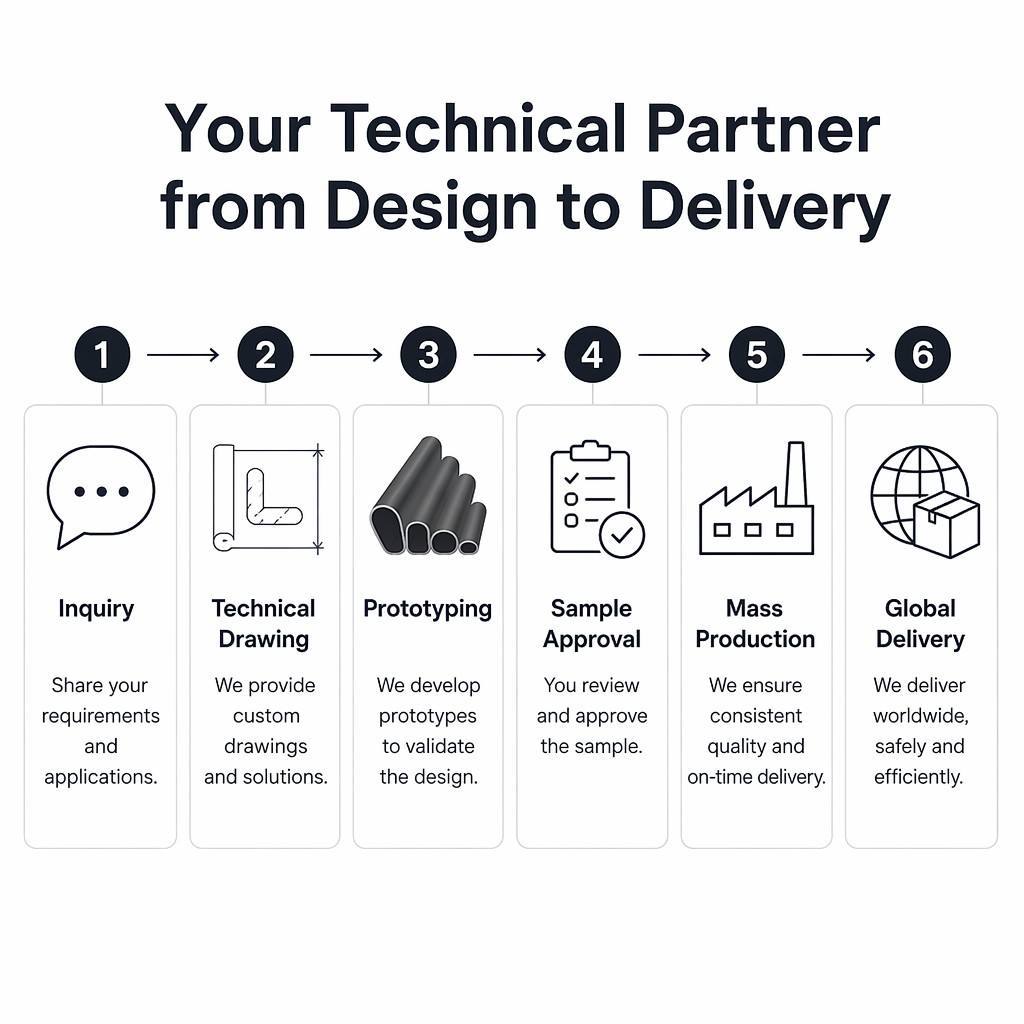
To help you navigate the complexities of designing and sourcing these critical components, we've distilled the most important points into this scannable guide. Understanding these core concepts will empower you to make informed decisions and ensure the success of your project.
Precision is Non-Negotiable: The performance of an extruded rubber profile is defined by its dimensional accuracy and material consistency. Even minor variations can compromise sealing ability, reduce lifespan, and lead to system failure. Prioritizing a manufacturer who demonstrates a commitment to tight tolerances and rigorous quality control is essential for creating a reliable product.
In-House Tooling is a Mark of Quality: The extrusion die dictates the final shape and quality of the profile. Manufacturers with in-house tooling capabilities offer significant advantages, including shorter lead times, enhanced quality control, better communication, and greater flexibility for design adjustments. This vertical integration reduces risks associated with outsourcing and ensures a smoother path from concept to completion.
Function Defines the Form and Material: Custom rubber profiles are engineered for specific functional roles, such as sealing, vibration damping, or edge protection. The needs of the application—whether it's an automotive door seal, a construction expansion joint, or an aerospace gasket—will determine both the profile's shape and the required material properties.
Material Selection is as Critical as Design: The operating environment is the most critical factor in selecting a rubber compound. You must consider the full range of temperatures, chemical exposures, UV and ozone presence, and mechanical stresses the part will endure. Using a material chart to compare compounds like EPDM, Silicone, Nitrile, and Neoprene is a crucial step in matching the right elastomer to the application's demands.
A Collaborative Partnership Drives Success: Sourcing a custom profile is not a simple transaction; it's a collaborative process. Partnering with a manufacturer who offers engineering support, material expertise, and transparent communication is key. This partnership ensures that your design is optimized for manufacturability and that the final product will meet all performance, quality, and timeline requirements.
Frequently Asked Questions (FAQ)
1. What is the difference between a custom extruded profile and a standard, off-the-shelf one? A standard profile is a generic shape (like a U-channel or cord) sold in common sizes and materials. A custom extruded rubber profile, however, is engineered and manufactured to your exact specifications. This includes a unique shape, specific dimensional tolerances, a carefully selected rubber compound, and a precise durometer (hardness) to fit your application perfectly and deliver optimal performance where a standard part would fail.
2. Why is the extrusion die so important, and what are the benefits of in-house tooling? The extrusion die is the custom-made steel tool that shapes the uncured rubber as it's forced through the extruder. Its precision directly determines the final profile's accuracy. In-house tooling means the same company designs, manufactures, and maintains the die. This offers immense benefits: enhanced quality control, faster lead times, rapid prototyping and adjustments, reduced communication errors, and ultimately lower project risk compared to outsourcing the tool to a third party.
3. What are the most important factors to consider when selecting a rubber material? Choosing the right material is critical for the profile's long-term performance. The key factors you must consider are:
- Operating Temperature Range: The material must withstand the highest and lowest temperatures it will encounter.
- Chemical/Fluid Exposure: It must be resistant to any oils, fuels, solvents, or chemicals present.
- Environmental Exposure: For outdoor use, resistance to UV radiation, ozone, and water is essential.
- Mechanical Requirements: This includes the needed hardness (durometer), flexibility, and resistance to abrasion or tearing.
4. What are some of the most common materials used for rubber extrusion, and what are they good for?
- EPDM: The go-to choice for outdoor applications like automotive weatherstripping and construction seals due to its excellent weather, UV, and ozone resistance.
- Silicone: Best for high-temperature applications and when cleanliness or biocompatibility is needed, such as in food-grade or medical devices.
- Nitrile (NBR): Ideal for applications with exposure to oils, fuels, and greases, like automotive fuel lines or industrial hydraulic seals.
- Neoprene (CR): A versatile, all-purpose material with a good balance of oil resistance, durability, and weather resistance.
5. What information do I need to provide to get a quote for a custom extruded rubber profile? To provide an accurate quote, manufacturers typically need a technical drawing or CAD file of the profile, specifying all dimensions and tolerances. You should also provide details on the application, including the environmental conditions (temperature, chemical exposure), the required material and hardness (or ask for a recommendation), the desired color, and the estimated annual quantity. The more detailed your information, the more accurate the quote will be.
Conclusion
We hope this comprehensive guide has illuminated the intricate world of custom extruded rubber profiles and their pivotal role in advanced engineering. From the foundational importance of precision tooling to the critical task of material selection, every step in the process is integral to creating a component that delivers on its promise of performance and durability.
Our commitment to quality, precision, and efficiency, backed by in-house tooling and material expertise, ensures that your projects achieve consistent, high-performance results. The ability to control every variable under one roof—from die design to final production—translates into superior parts, shorter lead times, and a more reliable supply chain for our partners.
Partner with us to transform your design challenges into perfectly engineered extruded rubber profile solutions. Let's work together to build products that are more reliable, durable, and successful.