How Silicone Tubing Is Made: Extrusion, Curing and Quality Checks
- Share
- publisher
- RESRUB
- Issue Time
- Oct 19,2026
Summary
Follow silicone tubing from drawing review and compound selection to extrusion, curing and inspection. Learn which dimensions, sample checks and application details to agree before ordering custom tubing.
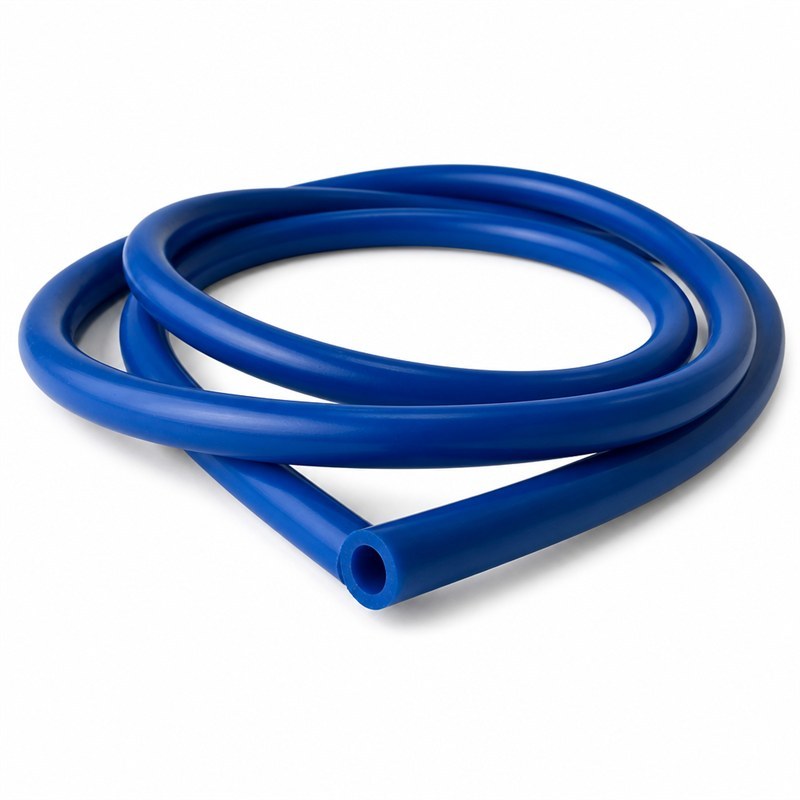
Drawing → Compound → Extrusion → Curing → Inspection → Approval
How is silicone tubing manufactured?
Silicone tubing is commonly made by shaping an uncured silicone compound through an extrusion die, then curing it to form an elastic tube. The finished tube is checked against the agreed drawing and application requirements before cutting, packing and release. [1][2]
For a buyer, the useful question is not only how the tube is made. It is which requirements are agreed before production and how the finished sample will be accepted. This guide connects each manufacturing stage to a practical purchasing check.
- Agree the drawing and intended service.
- Select the compound and curing route.
- Approve a sample and documented inspection criteria.
Scope: a general process guide, not a claim that every RESRUB tube uses the same compound, equipment settings or test plan. Images are supplied product illustrations, not photographs of manufacturing operations.
Start with the drawing, not just a nominal size
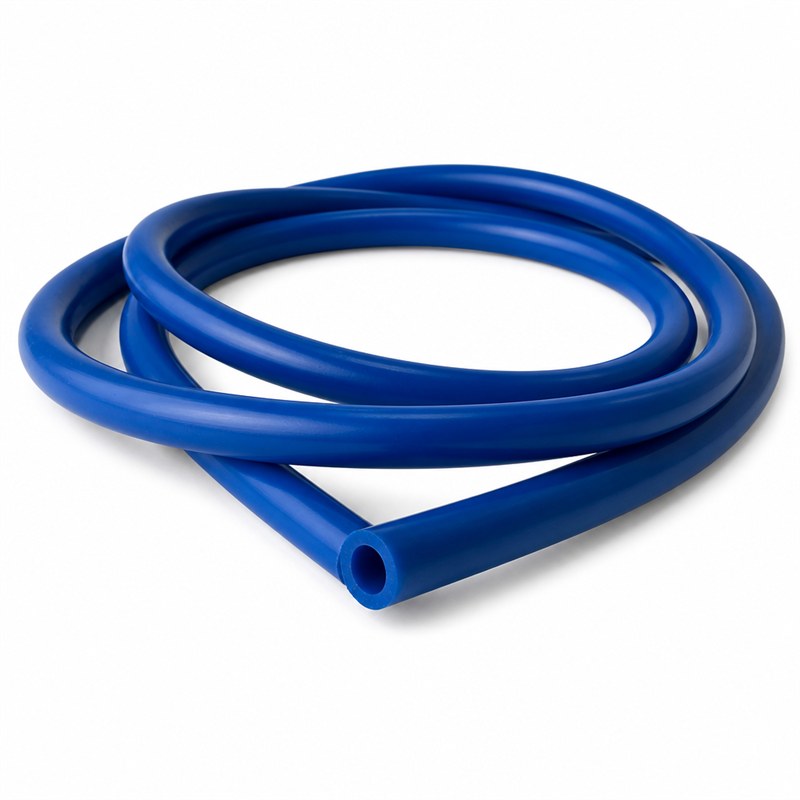
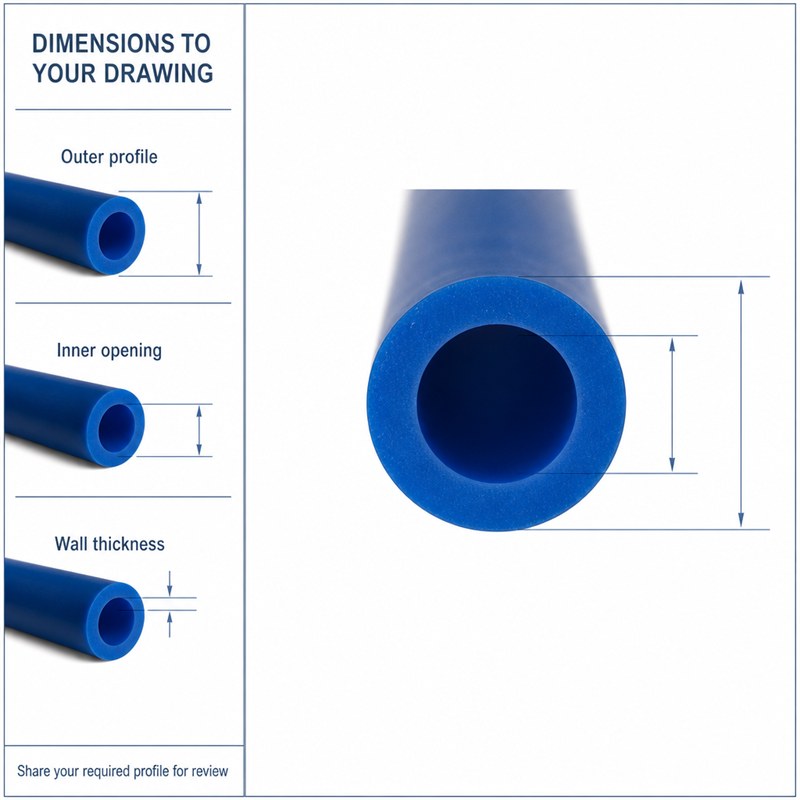
Write down the inside diameter (ID), outside diameter (OD), cut length and the tolerance for each critical dimension. For a concentric round tube, nominal wall thickness is (OD - ID) / 2. This calculation does not replace checking the actual wall around the tube.
Explain which dimension controls the assembly: the bore fitting over a connector, the outside fitting through a guide, or a minimum wall requirement. Ask the supplier to review these requirements together rather than assuming that every dimension can vary independently.
- Name the drawing revision and measurement units.
- Specify a minimum wall if thin spots matter.
- Include the mating connector or an assembly drawing.
Choose a compound for the service conditions
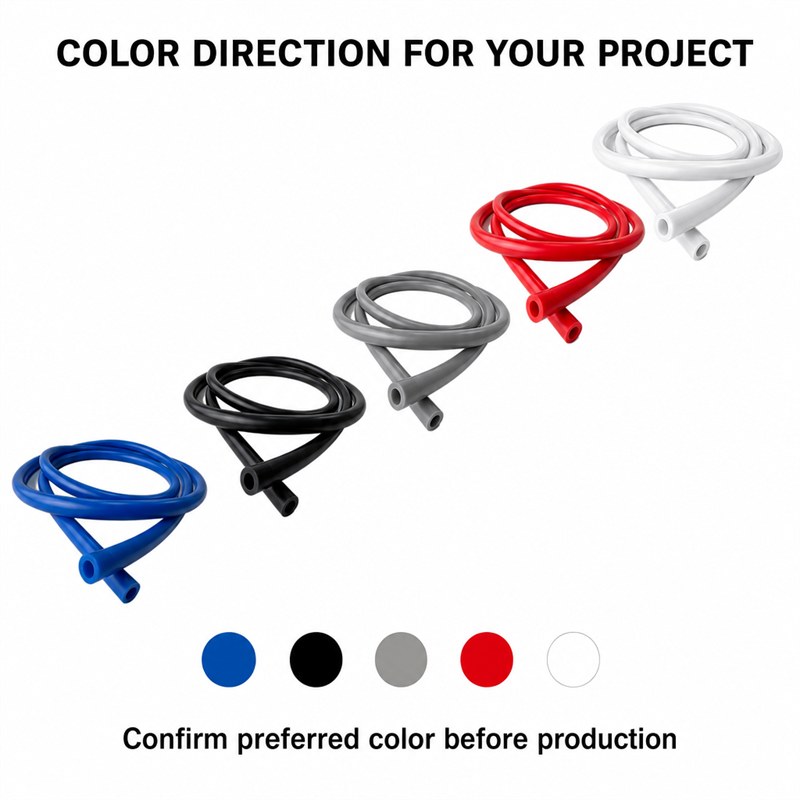
Compound choice and processing must work together. Hardness, flow behavior, additives and the curing system can affect the result. Color matching belongs in this discussion, but color alone does not identify a grade or establish suitability for an application. [2]
Give the manufacturer the fluid or contact medium, operating conditions and any cleaning procedure. If documentation is required for a particular end use, request it for the proposed material and finished construction; do not substitute a generic silicone description.
- State the required hardness and color reference.
- Identify the actual medium and operating conditions.
- Agree which material records accompany the sample.
Form the tube and control the final geometry
Extrusion shapes the uncured material into a continuous profile. Tooling geometry, material behavior and process settings work together; the die alone does not determine the finished result. A production trial provides a basis for checking the tube against the drawing. [1][2]
Ask how the supplier will monitor your critical dimensions during the run and which results will be supplied with the sample. Where fit is important, assess the finished tube in the actual connector or fixture rather than accepting a photograph as evidence.
- Review first-sample dimensions before approving production.
- Agree checks at representative points in the run.
- Keep the approved drawing and sample linked to the order.
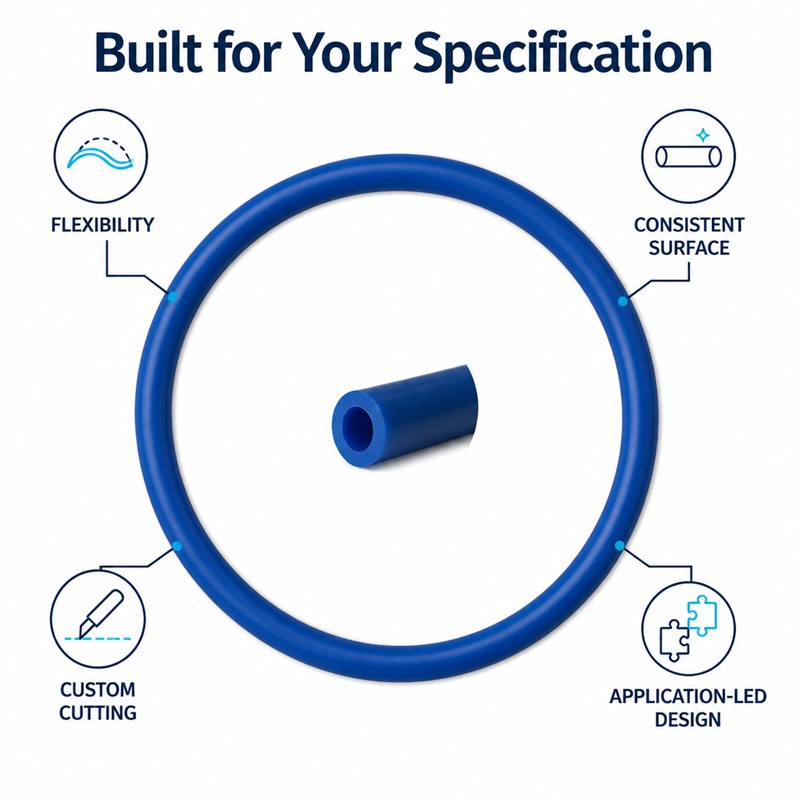
Confirm curing and any post-curing requirements
Curing crosslinks the silicone into its elastic form. Silicone extrusion compounds can use peroxide or platinum-catalyzed addition curing. The correct processing conditions depend on the selected grade; one temperature and time recipe should not be presented as universal. [1][3]
Post-curing is a separate treatment that may be specified to address residual volatile components or final property requirements. Whether it is needed, and how it is performed, should follow the material guidance and application specification. Platinum curing is not an automatic promise that no post-curing is needed. [1]
- Record the selected compound and curing route.
- Confirm whether post-curing is included.
- Request evidence for required finished-product properties.
Do not infer food-contact, medical-use or other product approval from the curing-system name. Discuss the exact use and required supporting documents before ordering.
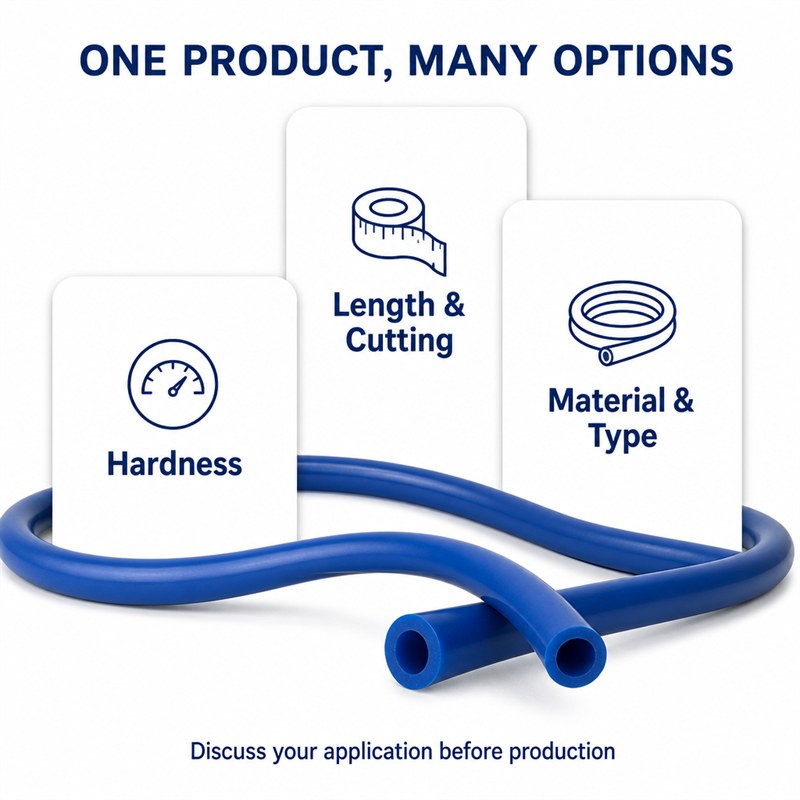
Turn quality expectations into acceptance checks
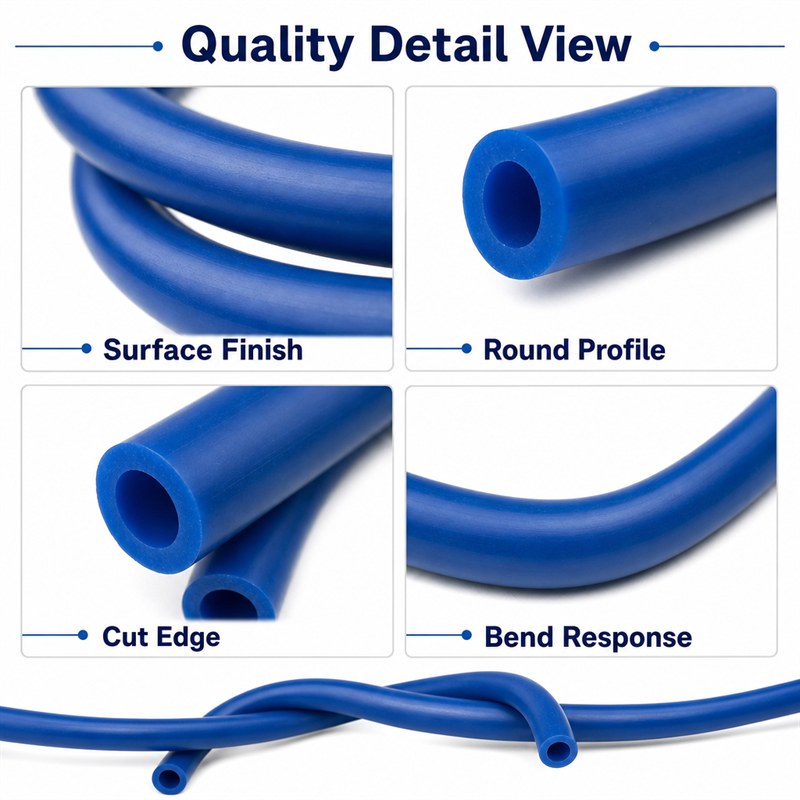
Build an inspection plan that a buyer and supplier can both use. Include dimensions, appearance, cut ends and traceability, then add application tests only where they are relevant and agreed. A product photograph cannot establish a pressure rating, a service life or a dimensional tolerance.
For soft tubing, agree the measurement method so the instrument and handling do not distort the part. Record results against the drawing revision. Keep material-property testing separate from checks on the assembled tube and connector.
- Set measurable limits instead of asking for perfect quality.
- Define how many samples are checked and where they come from.
- Resolve sample deviations before releasing repeat orders.
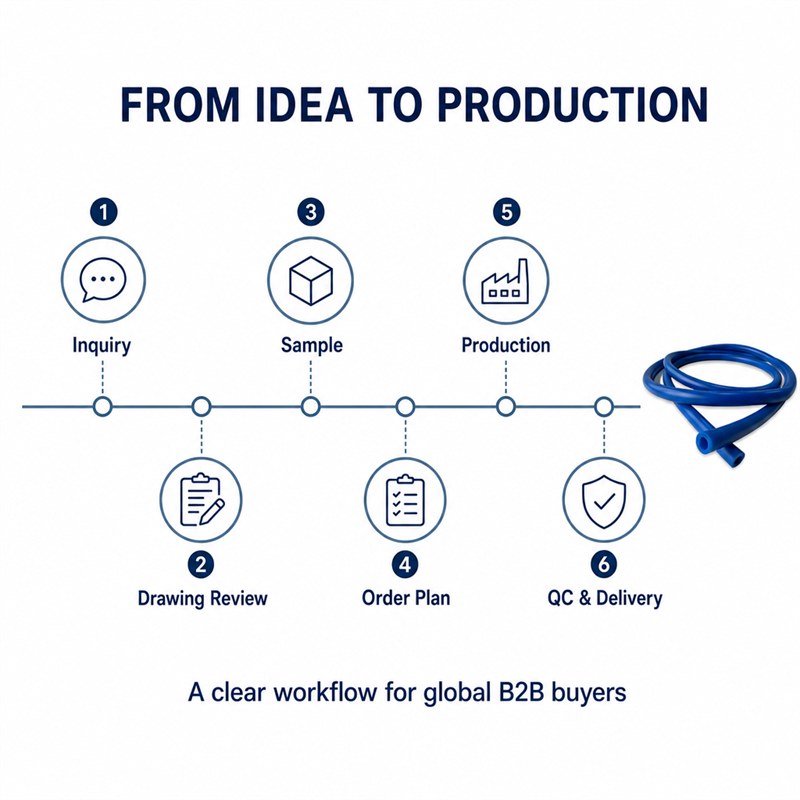
Move from a sample to a repeatable order
A useful inquiry includes a drawing, intended application, quantity and a list of acceptance documents. Before repeat production, confirm the approved sample, packing method, batch identification and the process for discussing changes to the material or drawing.
RESRUB, the overseas brand of Dongguan Xingfeiyu Rubber And Plastic Products Co., Ltd., supports custom silicone tubing and drawing-led projects. Its company capabilities include custom colors, free design support and a stated MOQ of one piece. Rapid tooling of as little as two hours is advertised for suitable projects; ask the team to confirm applicability and the full production schedule for your design.
- Send ID, OD, length, tolerances and drawing revision.
- Describe the medium, conditions and assembly.
- Request sample approval before the repeat order.
Silicone tubing purchase and acceptance checklist
Use this checklist to start a technical discussion. It is not a universal test standard or a claim that every listed test is included with every order.
| Area | What to specify | How to agree acceptance |
|---|---|---|
| Dimensions | ID, OD, minimum wall where relevant, cut length | Drawing limits and agreed measurement method |
| Material | Compound, hardness, color, intended use | Agreed material documents and sample approval |
| Appearance | Surface, cut ends, visible contamination | Written acceptance criteria or reference sample |
| Application fit | Connector, routing, pressure or vacuum if relevant | An agreed application-specific test; no generic rating assumed |
| Delivery | Quantity, cut lengths, packing, identification | Order records and agreed release documents |
Frequently asked questions
Does every silicone tube need post-curing?
No universal rule fits every grade. Confirm the material guidance, curing route and end-use requirements, then agree whether post-curing is part of the specification. [1]
Does platinum-cured mean approved for every application?
No. It identifies a curing route, not a complete end-use approval. Ask for the evidence relevant to the proposed material, finished tube and intended use.
What tolerances should I request?
Start with the dimensions that control your assembly. Put their limits on the drawing and ask for a manufacturability review; no unverified universal tolerance is offered in this guide.
What should I send for a custom quote?
A dimensioned drawing or sample, application details, quantities, color and hardness requirements, and any inspection or documentation requirements.
The sources below support general processing explanations. They do not certify RESRUB products or establish a supplier relationship.
[1] WACKER: Solid and Liquid Silicone Rubber - Material and Processing Guidelines
[2] Saint-Gobain: Silicone Tubing - Material and Process Expertise
[3] NewAge Industries: Silicone Curing - Strength and Stability