How to Choose the Right Rubber Sealing Strip for Your Application
- Share
- publisher
- RESRUB
- Issue Time
- Aug 27,2026
Summary
Choosing the right rubber sealing strip depends on material, hardness, dimensions, and environment. Follow this practical checklist to select the correct strip.
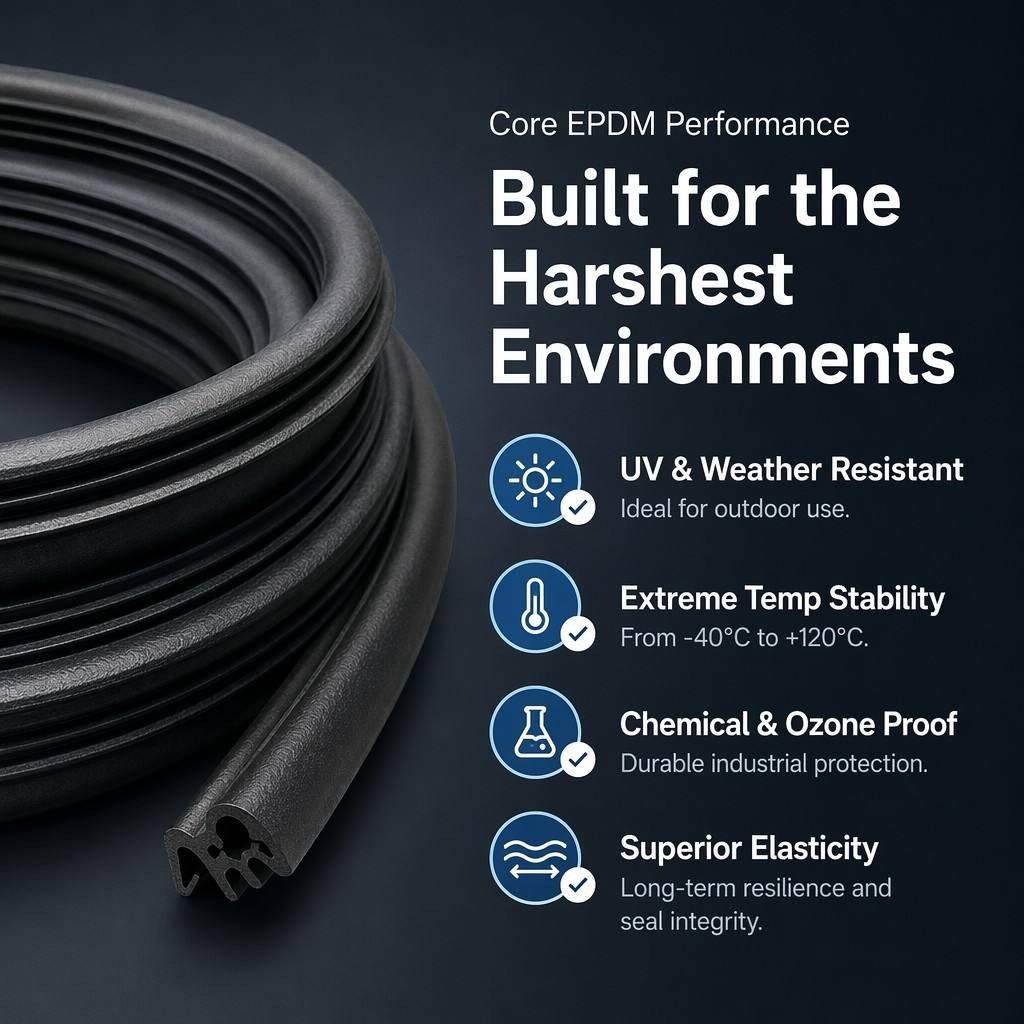
Choosing the right rubber sealing strip is the difference between a seal that lasts years and one that fails in months. The selection depends on material, hardness, dimensions, and the operating environment.
Follow this practical checklist to specify the correct strip for your application.
1. Match the Material to the Environment
Define the operating temperature, chemical exposure, and weather conditions first. EPDM suits outdoor and heat/cold cycling; NBR resists oil and fuel; silicone handles high heat and food contact.
If the strip will touch oils, solvents, or aggressive chemicals, NBR or FKM are safer choices than EPDM.
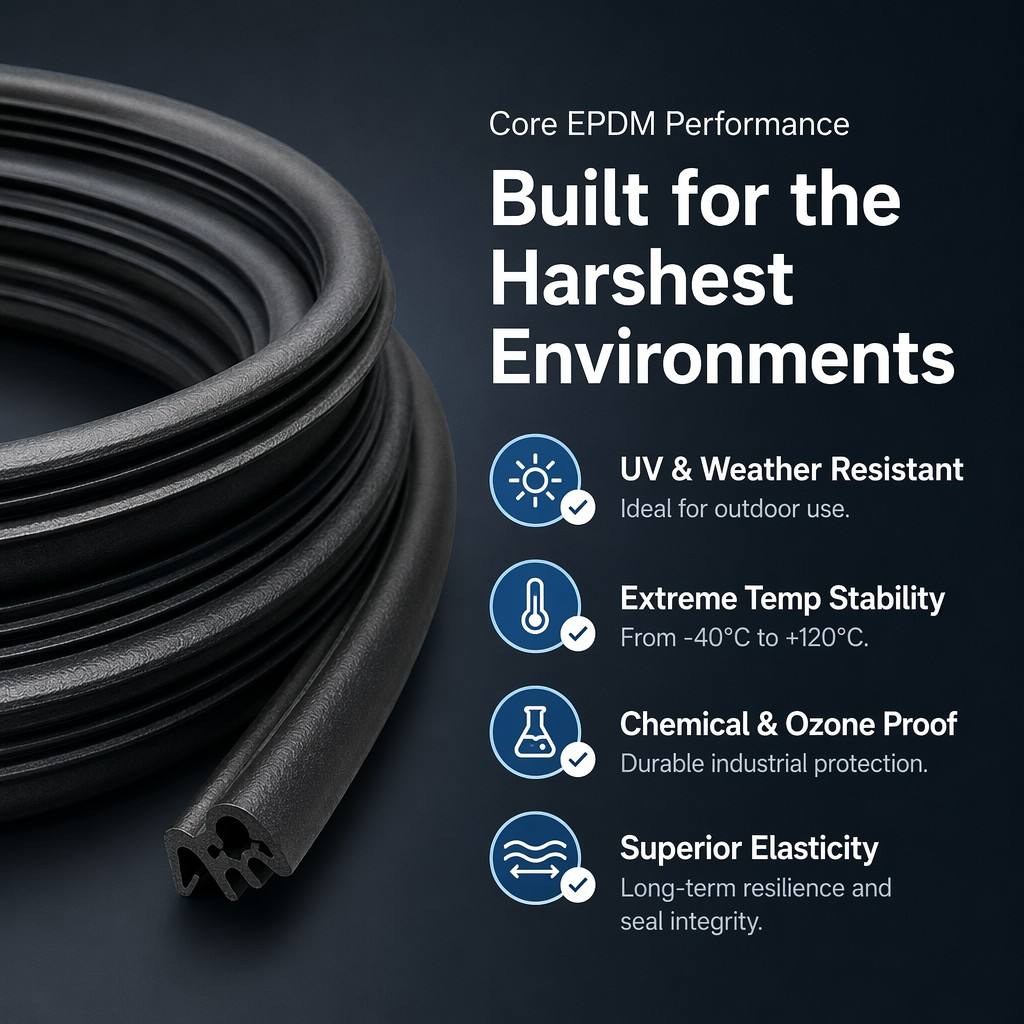
Material selection for rubber strips
2. Specify Dimensions and Tolerances
Measure the groove or gap accurately: width, depth, and compression ratio. A strip that is too thick will not close properly; too thin will leak.
Provide the cross-section profile (flat, bulb, U-channel, custom) and the total length, plus tolerances for production consistency.
Accurate strip dimensions
3. Choose the Right Hardness
Hardness is measured in Shore A. Softer strips (40-50 Shore A) seal uneven gaps and compress easily; harder strips (60-80 Shore A) resist wear and hold shape under load.
For dynamic sealing with movement, softer materials reduce friction; for static sealing under pressure, medium-hard materials perform best.
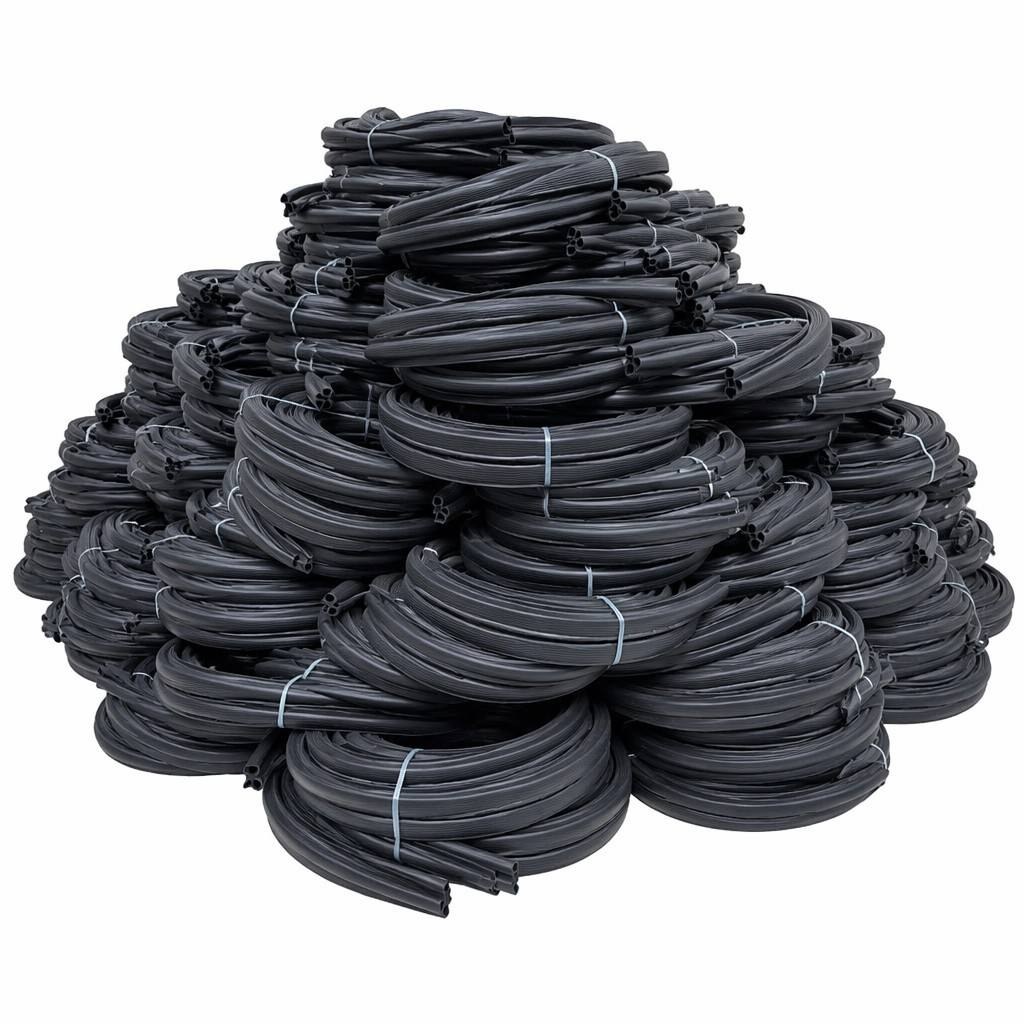
Shore A hardness comparison
4. Consider Exposure and Aging
Outdoor strips face UV, ozone, rain, and temperature swings. EPDM is the leading choice for long-term weathering resistance.
For extreme environments, ask for an accelerated aging test report to confirm the strip meets your expected service life.
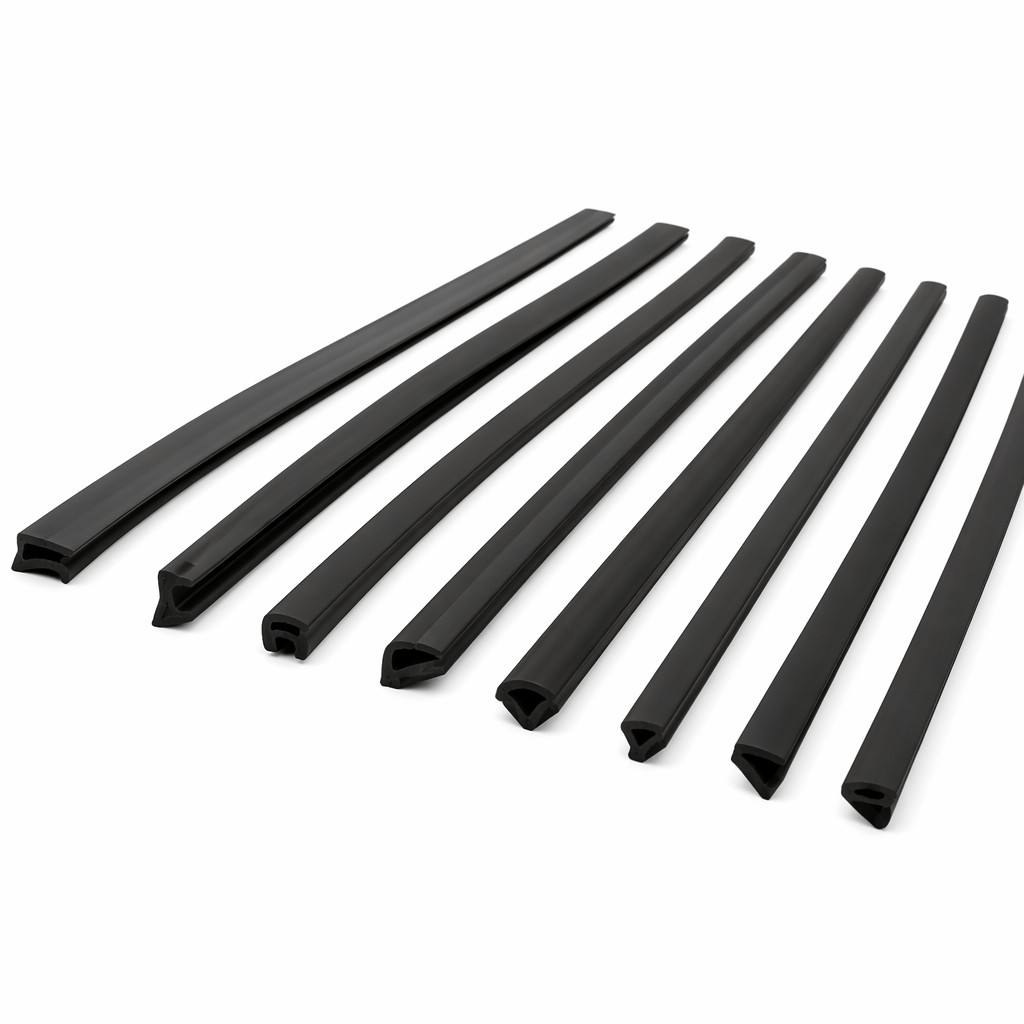
Weather-resistant seal strip
5. Custom vs. Standard
If a standard profile does not fit, custom extrusion is often the best answer. We can match your drawing, sample, or groove with a tailored cross-section.
Custom strips also allow exact colors, special compounds, and integrated features like mounting lips or adhesive backing.

Custom rubber strip specifications
Get help with your selection. Send us your drawing or sample, and our technical team will recommend the right material and profile. Start a custom project or contact us.